Showing posts with label Language. Show all posts

Tuesday, March 28, 2017

First Comes the Thought Then Comes the Action


I love words. I love writing words, reading them, speaking and listening to words, but there are certainly some words I really dislike, even hate, and so I refrain from using them. I especially have a great disdain for words used against others to humiliate, disrespect or abuse those who may not be in a position of power, who can't advocate for themselves or have a voice, particularly children.

When I was very actively involved in the specialized training as a Youth Care Worker, there was a plethora of information that I was constantly learning about, working with youth at risk. Some of this education I agreed with, some I didn't.

Over the years of experience working with youth, I became acutely aware of living in a society and culture that is more concerned with controlling youth, as opposed to understanding them. There are many ways to control other, and I think language is definitely a very powerful one. Historically we have witnessed cultures being annihilated or on the verge of disappearing because of the loss of language. Language is culture.

One of the topics included a youth care training session, was how certain words are used when describing youth, and I believe it's often used as a means of controlling those in trouble with the law or who have mental health or behavioural issues, and usually these are not mutually exclusive, but are often directly or indirectly related.

The word delinquent immediately comes to my mind, which I absolutely loath. We might not this hear this word so often now, perhaps because it's politically incorrect, but I do think there still exists a mindset of an increasingly hardened culture.

Words and language are so important, and the context in which they are used determine their power in negative or positive ways. Years ago it came to my attention how youth are so often described by words starting with the letter d.

Often these words label, judge and discriminate against those on the margins of society, for one reason or another,through no fault of their own, perhaps due to mental illness, abuse or addiction within their families or because of poverty, gender, ethic origin or religion.

A number of these words, we might think about completely eliminating from our vocabulary, or be mindful in our thoughts about the kind of the words we say, and how we use them, because words can build up, tear down, demean and cut deeply. It's been said, first comes the thought, then comes the action.

Here's a list of these d words. You may have heard some of these growing up or even said some of them yourself and we might not openly say them, but we might think them, when relating to others. Words are powerful, and I need to think before I speak, and weigh my thoughts, my words and use them wisely.
                        
Delinquent        
Disgusting
Damaged
Damned
Dangerous
Debauched
Debilitated
Disabled
Disturbed
Disordered

Deviant
Difficult
Devilish
Delayed
Defective
Detached
Diagnosed
Dumb
Deaf
Deficit

Defensive
Deformed
Defiant
Degenerate
Deliberate
Demented
Demand
Demonic
Desparate
Dependent

Deranged
Desolate
Destitute
Despondent
Deserted
Despicable
Destructive
Despised
Deterrent
Detriment

Determined
Detox
Disturbed
Devalued
Development
Devious
Diabolical
Deluded
Disillusioned
Dignity

Disappointed
Disadvantaged
Dirty
Disagreeable
Discouraged
Disappeared
Disaster
Discarded
Discharged
Discipline

Disapprove
Disclosure
Discomfort
Disconnected
Discontent
Disengaged
Disgraceful
Dishearten
Dismissed
Dishonoured

Despair
Desperate
Disposable
Dissatisfied
Disruptive
Disassociated
Distracted
Distrust
Distorted
Distressed
Dope
Dubious
Dummy
Dunce


Friday, July 8, 2016

Creativity, Tarot, The City of Words and Gilgamesh


Eight years ago when I began to seriously study Tarot, I saw creativity as being naturally and directly connected for many reasons, and has increasingly been affirmed to me as being a perfect fit, especially as an artist.


 Primarily it's necessary to have a creative, intuitive perception for both pursuits. Consciousness and the unconscious are also involved with execution of both these creative arts and skill. This instinct and ability is certainly not exclusive to certain individuals, as we all possess this instinct and creative ability, but they must be nurtured and practiced in order for it to increase.

 C.G. Jung stated  'the collective unconsciousness is the "soul of the world" and it is in that 'soul' that our shared symbolism of the archetypes dwell. An archetype is a universal human behaviour or pattern. Tarot and art help me to tap into the universe's unlimited creative energy through archetype.

Tarot has long held the human imagination for ages and shows no sign of disappearing. Art and creativity do the same. Both reflect story telling, and a self-knowledge of the soul. Tarot imagery is fundamental and exact in describing the multi-coloured working of the inner psyche that spring from the imagination spontaneously, in a poetic language that tells the story of the archetypal life journey. This language of story is found on many levels and in countless creative outpourings over the millennia.

The use of the Mythic Tarot deck has allowed me to study the images of the Greek Gods so beloved by the Renaissance artists and writers that formed art and literature, the cultural underpinning of the whole western world.

 Currently I am reading a fascinating book given to me by a good friend, by Alberto Manguel, entitled The City of Words. His book suggest that perhaps through "the stories we tell, these hold secret keys to the human heart. "
He encourages us to look at the artists and other visionaries who can help us change our hearts for the better and build a better world through myth and story.

Like in the story of the ancient epic poem Gilgimesh, we can learn to live life and to love well.


Gilgamesh Morns Enkidu

Saturday, June 18, 2016

I'm Curious About Alberto Manquel


I am far from being an academic and scholar or even an avid reader, though I do make an effort to read especially philosophical or psychological books and books about creativity. I love life long learning.

Alberto Manquel is all these things, those he sees himself as a reader. I have never read any of his books and never even heard his name until yesterday on my favourite program CBC Ideas. Last night's show was about the listeners and the episodes that they most loved, and why.

What sparked my interest was a clip froman episode that featured Alberto Manguel. What was said about language being a form of love, and how stories is the language that defines "what we are", affirms "that we are" and how this is about our mutual perception, really struck me. I had to find out more about this dude Alberto Manquel.

There was mention of his new book creativity, called Creativity. From what I've learned, this book it's more about Alberto Manguels' curiosity about curiosity. I am of the opinion the creativity is curiosity, about asking questions and discovery. It greatly saddens me to see an educational system that is generally lacking in creativity, curiosity and questions, the opposite of what it should be.

As Einstein once said,  " He had no special talent beyond being passionately curious, we can say that there is no other avenue to cultivating creative work aside from impassioned curiosity. "

Alberto Manquel says " Schools and colleges have become training camps for skilled labour instead of forums for questioning and discussion. "

Tuesday, November 17, 2015

Conversation Versus Connection - ``I`d Rather Text Than Talk``


Over the past few months, I`d written a blog post on the subject of what has been coined as being a new word in the zeitgeist, called "phubbing". I don't know who came up with that one, but I rather liked it, because it adequately described what I`d been experiencing. Phubbing describes that thing that happens when someone ignores you, tunes you out and focuses nothing else but their cell phone. It really annoy`s me, and I find it insulting in that it`s as if the person you are trying to talk with, couldn`t care less about you. It`s all about their relationship with their phone.

 I don`t have a cell phone. There have been times I wished I had one, but the more I learn about the negative affects from this form of connection with our devices, the more convinced I am that I don`t want one, nor do I need one.

I have always had an interest in language, social interaction, philosophy, and psychology. Our contemporary digital age has changed everything, which has got some great advantages, but I`ve noted that the most concerning negative repercussionit has also changed our relationships and social interactions that has begun to disturb me.

I heard Sherry Turkle interviewed about her book entitled Reclaiming Conversation on a radio interview yesterday. She clarified for me why I should be disturbed and explained what this obsession with our devices is doing to our relationships and our ability to be empathetic human beings.

 I also found this talk she gave about this today and have posted the youtube video below. I think it`s a real opener.
 I do believe we need to make face to face, real eye ball to eyeball conversation our focus, not connection if you want to be empathetic human beings.

Wednesday, September 23, 2015

Wade Davis " Catalogues of Culture "

Wade Davis


I've been listening to Wade Davis on a number of the CBC Radio Ideas program. So practically educated and visionary, he has so much to say about culture, language, and story telling. He states politicians follow, but story telling changes the world. The Catalogues of Culture lecture I think is the best I have heard. It is so rich the depth and breath of wisdom I'll listen to it again.

Thursday, June 11, 2015

The Death of English? Amazeballs!


Artist's need and want to express themselves via the language of creativity. Human beings have an innate desire and motivation to communicate. Language takes many forms in non-verbal and verbal expression. I am always drawn back to my interest in language and communication because it embodies so much of who I am as a human being, and as an individual artist, which I believe are really one in the same.

Last week I heard a discussion regarding the correlation between music and language. To me this is an obvious no brainer. What came first I ask myself, which I think is really like the question about what came first, the chicken or the egg. There really seems to be no hard scientific fact to know this, however there is evidence and much speculation about how music can improve language, speech and communication.

The study of linguistics in University helped me to see how language is a living thing, that changes over time and not set in stone,  forever contained inanimately within dictionaries. Finding out recent entries into the Merriam-Webster dictionary, of such contemporary words like amazeballs, chillax, schwack, ginourmous, gription, conversate, woot, etc., might disturb the language purists. Your spell check won't even accept them, and I wonder if they will stand the test of time through continuous usage.

After listening to CBC Q with Shad about the topic of whether or nor the English language is being killed off inspired this post. I have highlighted the podcast.


Monday, March 30, 2015

Lugubrious Linguistics?


I love communication, and I love language. My last year of University I had to take an academic elective so I could fulfill my degree requirements. The only courses that would fit in my schedule were, English Romantic Poetry, and Linguistics. I loved the Romantic Poetry. The Linguistics became my nemesis, and I became a little jaded. I did eventually come to appreciate the crazy world of Linguists, who seem to love to fight among themselves. I did not have that kind of special brain it takes to be good at it, and just barely passed the course.

My love of words stems from my mother who did crossword puzzles everyday of her life. She had her favourite words that have become mine as well.
Milk toast, insipid, vacuous, extrapolate, ort, lugubrious, limp, jaded, lucid, salacious, doolally, loquacious, interlope, banal, bucolic, are just a few words I am most fond of, though I don't use them often. I like to make words up, and so why shouldn't we? Language is a living thing. It is always changing and ever evolving.

I would have enjoyed watching this video in my Linguistics class. What I did find most compelling in my linguistics class was learning that linguistics is about the history of people, and you'll see this for yourself in this very humourous and entertaining, animated History of English.


Thursday, September 29, 2011

Struts, Faucet set to welcome latest open studio artist-in-residence - Arts - The Sackville Tribune Post

In my Contemporary Art History class we had Allison Creba give a guest lecture regarding her City Mail project. It was a wonderful presentation.

Today, I had an opportunity to sit down and have a great face to face exchange with her about the importance of communication, language, linguistics and all of the issues surrounding these matters. We both agreed that without written language, culture is greatly threatened.

The work she is doing is very important and if she doesn't continue, I told her I hoped that she would write a book about her City Mail project.

Yesterday I heard Feminist/Activist Gloria Steinem say , "Without change makers there is no change ". Allison Creba, she's a change maker!


Friday, August 19, 2011

John Baldesari - Why Do We Make Art?

This week I listened to an interview on CBC that Eleanor Wachtel  On The Arts had with John Baldesari.

I heard it some time back and then again yesterday, then the repeat program late last night. Tonight I downloaded the podcast and listened even closer again.  Listening several times to this interview, I really began to get a feel for who this artist and man is. I think I am either a slow listener or a slow learner, and yes a little OCD!


John Baldesari had been invited to exhibit his work at NSCAD  back in 1971, the year before I became a student there, at the beginning of my art education, so unfortunately I missed him. 

He had the students write on the gallery walls "I will not make any more boring art".  He said he'd written this statement down in one of his journals, because he'd felt guilty about making boring art. Upon the completion of the work in the NSCAD gallery , he was rather shocked to see the whole gallery filled with writing on all the walls, with his statement from students who also were seemingly  making boring art. It was not what he was anticipating and it was a real awakening to him.

Truthfully, I did not know anything about him until I returned to University as a mature student, to complete my BFA at Mount Allison. Gratefully, I have now come to find out about John Baldessari and appreciate what a likeable, compelling person and artist he is. Genuine, honest a humble man, he has keen wit, great creative integrity, energy  and an insightful mind. Being a teacher for much of his career, he obviously must have been a great one.

He  really confirmed for me what I have believed about why it is many creative people make art. Firstly it's fun! He mentioned this more than once.

Spiritual nourishment he said, is what art gives to people and he had been given a gift and he really didn't know why, but he needed to the best artist he can be in order to  re-enchant people's vision as if they were seeing things in the world for the very first time, because human beings should not take things for granted. Indirectly art can change people's view he stated.

Considering he's upbringing, I think I would be correct in saying that art for him is a spiritual experience and as an artist he wants to help others and make the world a better place. It is a very simple message, and one that reflects I think, his sense of being an artist , as being his vocation.  His love for language, communication, words, reading, learning and knowledge were very evident having three libraries in his home.

Definitely the intellectual,but tempered by humble roots that he's not forgotten. Speaking of his father in a loving way, referring to him as a working man, and a "peasant" from the old country. He  attributed much of his creative sensibility to his mother who had a interest in reading and art.

Today as I was going through these bits and pieces of paper I am always collecting after writing down people's names, I want to find out about, artists, musicians, interesting people, places, things, books and words of wisdom I come across, I thought this quote was  a very fitting summation of what I have learned about John Baldesarri and the impression he  has made upon me. He often thinks of himself as a frustrated writer, who almost became a social worker and who unfortunately has been dubbed a conceptual artist he says.

"Knowledge is a beautiful thing, but the using of knowledge in a good way is what makes for wisdom.  Learning how to use knowledge in a sacred manner, that's wisdom to me.  And to me, that's what a true Elder is." Sun Bear, CHIPPEWA

John Baldesarri is not only a great artist, he is learned, knowledgeable and wise elder.

Wednesday, May 11, 2011

Living Language


Presently I just started my non-fine art elective Spring classes as per required for my BFA degree so I can graduate next Spring.

It's a little , perhaps considerably different, for me being enrolled in classes other than Fine Arts. I do keep making connections with what I am studying right now, and my Fine Art studio, Art Seminar and Art History classes, I just completed over the past year. There are some obvious connections with my Introduction to Poetry and the Linguistics class, The Introduction to Language. They both are the expressions of living language, which can be a very imaginative process that is enabled within a disciplined structure.

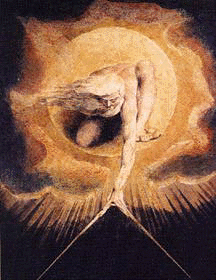
Studying the composition of the Sonnet, the powerful imagery of William Blake's Songs of Innocence and Experience, lend themsleves to great imaginings, simultaneously built upon a foundation, much like a solid under drawing done before starting a painting.

Linguistics, language and their structure, phonetics and phonology, can be somewhat clinical, but very compelling and allows for a greater understanding of the why and how of it's meaning and function, on a myriad of levels. Language is truly a mystery and a miracle. The meanings of words and sounds among every living creature on earth is really a fascinating study and it is an ongoing education.

If you talk to a man in a language he understands, that goes to his head. If you talk to him in his language, that goes to his heart.


Nelson Mandela

"Through learning language, we learn about culture.
Through learning about culture, we learn respect for others.
Through learning respect for others, we can hope for peace."