Showing posts with label The Story Telling Animal: How Stories Make us Human. Show all posts

Sunday, February 1, 2015

" Boy, Snow, Bird " - Helen Oyeyemi

Helen Oyeyemi


I intended to write this post sometime ago, when I first heard it on Eleanor Whachtel's, Writers and Company, but the time wasn't right. Feels like the right time now, after having read The Book of Negroes a few months back, written by Lawrence Hill, and has been recently made into ten episode mini-series, which I have been watching and really enjoying. Usually I find the book better than the movie, when books are made into movies, but this series is the exception. The mini-series made the book come alive. Both the book and series are very educational and enlightening to say the least. The factual and fictional story changed and even challenged my ideas about the meaning of racism.

Eleanor Whachtel's guest, author Helen Oyeyemi wrote her own interpretation and re-telling of the fairy tale Snow White, in her book entitled, Bird, Snow, Bird . This book also challenges one's ideas about racism, beauty, identity, and our perception about our reflection that we see in the mirror. The mirror she describes as being a either a clock or a door. This is a wonderful analogy.

Helen Oyeyemi's interest in fairy tales, and story telling is so insightful, and compelling. Story telling, like fairy tales reflect, what it means to be human, based on culture, archetype and stories, that embody the human experiences and struggles with morality.

When I was a little girl I had a birthday party when I turned 10. My mother gave me a Snow White watch, and a small figurine to match.  I loved Snow White so much, and treasured this birthday gift. I would often wish I still had the figurine of Snow White, but I broke it. I don't know why I loved Snow White so much. I think perhaps as a child, she was my ideal of the perfect woman. Wow did I ever get that wrong.

After hearing Helen Oyeyemi's interview, how could I ever again think or feel the same way about the perfect Snow White, which is a relief I must say.

"  I don't feel there's a difference between the real world and the fairy-tale world. They contain psychological truths and, I guess, projections of what the culture that tells them thinks about various things: men, women, aging, dying — the most basic aspects of being human. "

 - Helen Oyeyemi

Saturday, October 11, 2014

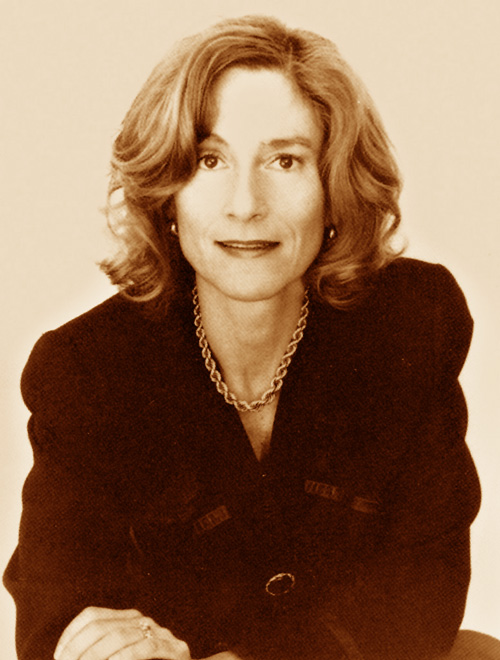
Martha Nussbaum - Take My Advice


I had a crazy kind of vivid, lucid sexual dream just before waking this morning. It was with a man I really don't know, but did years ago, and I have unexplainable feelings toward him. This got me thinking about what this dream meant. I conjectured that so many of us avoid wading into emotional waters in order to protect ourselves from getting hurt. We are afraid we might drown if we let go and give our already broken hearts to another. Or perhaps the dream was about wanting what I can't have. Regardless my dream certainly does not match my reality. But it was an curious reflection, and I do believe our dreams can tell us about the greater and lesser secrets of the inner world.

I am not big on giving or getting advice, suggestions yes, but here is the best piece of advice I've heard in a long time, from  philosopher Martha Nussbaum, a letter she wrote, that can be found in James L. Harmon's book, Letters To The Next Generation From People Who Know A Thing Or Two. She writes about the importance of having a rich inner emotional life, not fearing feelings, allowing ourselves to be vulnerable, and how story telling can nurture empathy.


" Do not despise your inner world. That is the first and most general piece of advice I would offer… Our society is very outward-looking, very taken up with the latest new object, the latest piece of gossip, the latest opportunity for self-assertion and status. But we all begin our lives as helpless babies, dependent on others for comfort, food, and survival itself. And even though we develop a degree of mastery and independence, we always remain alarmingly weak and incomplete, dependent on others and on an uncertain world for whatever we are able to achieve. As we grow, we all develop a wide range of emotions responding to this predicament: fear that bad things will happen and that we will be powerless to ward them off; love for those who help and support us; grief when a loved one is lost; hope for good things in the future; anger when someone else damages something we care about. Our emotional life maps our incompleteness: A creature without any needs would never have reasons for fear, or grief, or hope, or anger. But for that very reason we are often ashamed of our emotions, and of the relations of need and dependency bound up with them. Perhaps males, in our society, are especially likely to be ashamed of being incomplete and dependent, because a dominant image of masculinity tells them that they should be self-sufficient and dominant. So people flee from their inner world of feeling, and from articulate mastery of their own emotional experiences. The current psychological literature on the life of boys in America indicates that a large proportion of boys are quite unable to talk about how they feel and how others feel — because they have learned to be ashamed of feelings and needs, and to push them underground. But that means that they don’t know how to deal with their own emotions, or to communicate them to others. When they are frightened, they don’t know how to say it, or even to become fully aware of it. Often they turn their own fear into aggression. Often, too, this lack of a rich inner life catapults them into depression in later life. We are all going to encounter illness, loss, and aging, and we’re not well prepared for these inevitable events by a culture that directs us to think of externals only, and to measure ourselves in terms of our possessions of externals.
What is the remedy of these ills? A kind of self-love that does not shrink from the needy and incomplete parts of the self, but accepts those with interest and curiosity, and tries to develop a language with which to talk about needs and feelings. Storytelling plays a big role in the process of development. As we tell stories about the lives of others, we learn how to imagine what another creature might feel in response to various events. At the same time, we identify with the other creature and learn something about ourselves. As we grow older, we encounter more and more complex stories — in literature, film, visual art, music — that give us a richer and more subtle grasp of human emotions and of our own inner world. So my second piece of advice, closely related to the first, is: Read a lot of stories, listen to a lot of music, and think about what the stories you encounter mean for your own life and lives of those you love. In that way, you will not be alone with an empty self; you will have a newly rich life with yourself, and enhanced possibilities of real communication with others. "

Thursday, September 25, 2014

The Neurochemistry of Story Telling


 I'm always looking for meaningful information about the power of story telling. I found this video yesterday. I think it's a good one!

"  Stories are powerful because they transport us into other people’s worlds but, in doing that, they change the way our brains work and potentially change our brain chemistry — and that’s what it means to be a social creature. "